Smoked Meats: Experienced Techniques, Flavor Innovations, and Quality Control
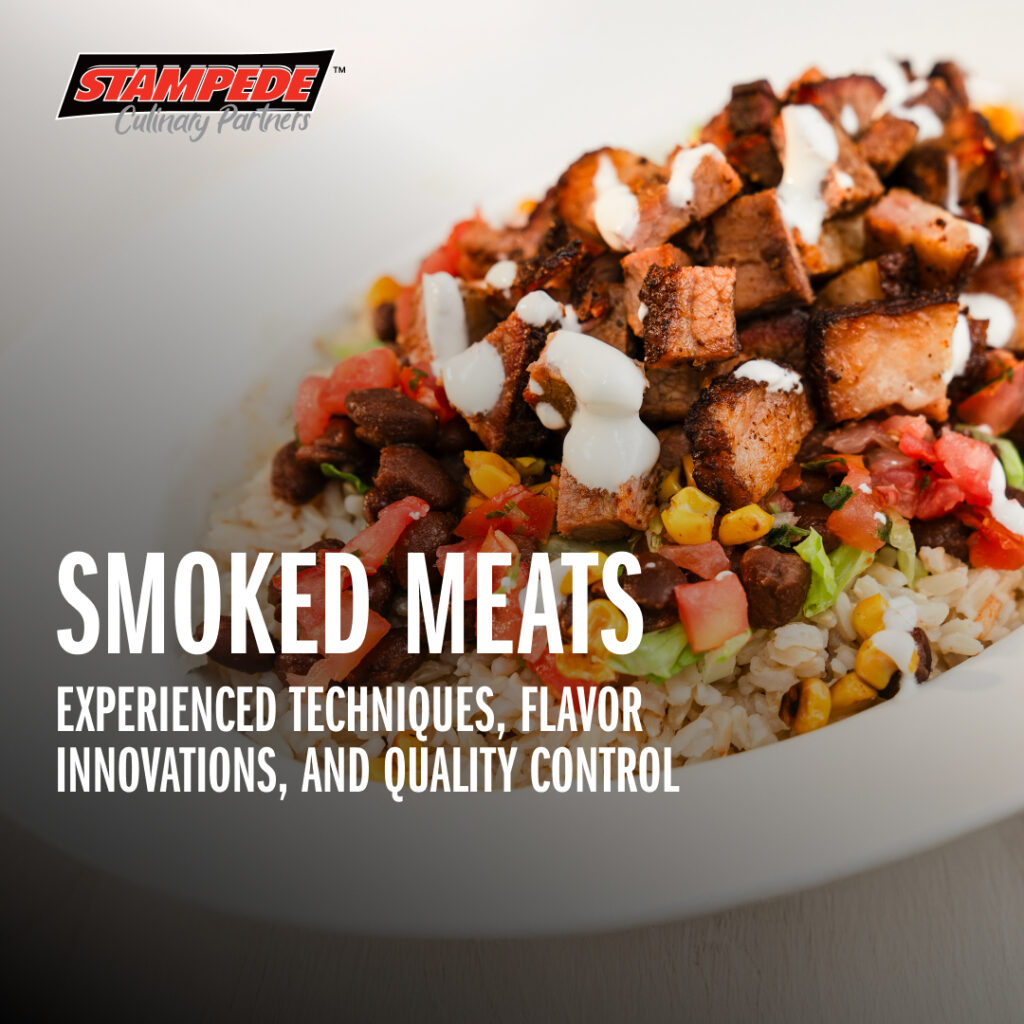
Smoking meat has a longstanding culinary tradition, transforming cuts of meat into mouth-watering delicacies with a unique depth of flavor imparted by smoke. The classic crowd-pleasers include tender beef brisket and savory pulled pork, but there’s an array of options that extend well beyond. Guided by the expert research & development team at Stampede Culinary Partners, we delve into the art and science of smoking meats at the commercial level.
The Most Popular Smoked Meats
Beef brisket reigns supreme. It’s the go-to choice for many customers, who gravitate towards the familiar comfort, marbling and rich flavors that brisket offers. Versatile in preparation, brisket can be enjoyed whole, sliced, shredded, or as burnt ends. This variety allows for customization across flavor profiles—spicy, sweet, or savory—to meet diverse tastes.
Pulled pork is another favorite, known for its tender texture and savory goodness, often enjoyed in the form of shredded pork carnitas or classic smoked pulled pork. More recently, smoked chicken has gained popularity, requiring a lighter, more delicate smoke. Chicken cuts such as breasts, thighs, and wings, as well as smoked half-chickens, offer a flavorful, leaner alternative to red meat.
Beyond the classic favorites, sausages, pork loins, hams, picnics, and bacon also hold a prominent place in the lineup of popular smoked meats. These products offer rich, smoky flavors that appeal to a wide variety of tastes and dining experiences. Sausages provide versatility, perfect for everything from breakfast to gourmet entrees. Meanwhile, pork loins and hams bring a tender, hearty option to tables, while bacon and picnics deliver signature, smoky indulgence. The mastery of smoking techniques for these meats ensures a consistent and flavorful profile, making them reliable favorites among customers seeking both traditional and innovative menu offerings.
Expanding beyond traditional smoked options, there’s growing interest in alternative beef cuts and larger, presentation-worthy options like pork or beef tomahawk steaks. These cuts showcase the creativity and technical skill of our R&D team, as they require precision in portioning, cook time, and temperature for optimal results.
Exploring Flavor Through Smoking Techniques
Central to the art of smoking is the open-air smoke oven, known for its ability to achieve the prized “bark,” a crispy outer layer that forms under high heat. This bark is an essential component, delivering both texture and a concentrated, smoky flavor. Open-air smoking, while traditional, is more labor-intensive and prone to moisture loss, making it a premium and more costly method.
To balance costs and optimize performance, the team frequently combines traditional smoking with sous vide techniques. By first smoking the meat and then finishing it with sous vide, they achieve both the depth of smoked flavor and an exceptionally tender texture while preserving moisture. For specific cuts, like brisket burnt ends, this process can include a final high-heat sear, adding a crispy, caramelized layer that enhances the flavor complexity. This approach not only creates high-quality, consistent products but also offers flexibility in adjusting flavors to match customer preferences without the added expense of prolonged open-air smoking.
The Role of Slow Cooking and Wood Selection
Slow cooking is essential in smoking, as it tenderizes tougher cuts of meat, breaking down collagen to achieve a soft, melt-in-your-mouth texture. A well-monitored slow cook not only improves texture but also allows for flavor to penetrate deeply into the meat. Our team specializes in sous vide cooking techniques and recipes to achieve the desired texture and flavor balance of each product both in the test kitchen and at scale on the production line.
The choice of wood chips plays a crucial role as well. Hickory is a standard favorite for its bold, earthy flavors, but hardwoods like oak and cherry also add dimension, creating subtle variations to enhance the natural qualities of each meat. While many customers opt for single-wood smokes, custom blends are available for those who want a distinct taste experience.
Post-Cook Processing for Enhanced Quality
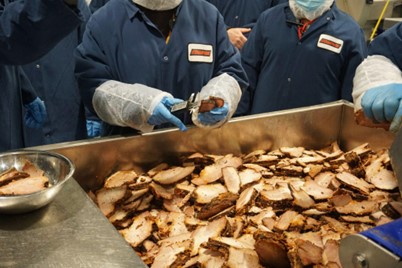
After smoking, post-cook processing is vital. Our team emphasizes strict quality control, handling each step—whether slicing, glazing, or packaging—with meticulous food safety protocols. This ensures that moisture levels are preserved, sauces are optimally applied, and every product is consistent in flavor and texture. Our facilities in Sunland Park, NM, and Alma, GA, both offer a specialized post-cook processing room that’s strictly monitored to ensure quality and safety are delivered every time.
Innovations in Efficiency and Tailored Preferences
We push the boundaries of traditional methods to enhance efficiency in small and large-scale production without sacrificing quality. Our team has a rich and extensive history of producing both traditional smoked meats and unique cuts. By adjusting humidity, heat levels, and cook times, our team fine-tunes our methods to ensure that each smoked product can be tailored to the specific needs of each customer for diverse tastes and applications. To achieve the highest quality and best end-user satisfaction, we always ask: Is the price point reasonable? Does it fit into the customer’s kitchen workflow? These questions guide our development process, ensuring the final smoked product is aligned with the customer’s goals and tastes.
At Stampede Culinary Partners, we are committed to delivering the best of smoked meats. Through a combination of experience in both traditional practices and new technical methodologies, we meet the evolving tastes and preferences of our customers, creating flavors and textures that resonate across a range of smoked meat offerings. Whether it’s the depth of a hickory-smoked brisket or the tenderness of sous vide smoked chicken, each product we prepare reflects the skill and dedication that makes smoked meats a special culinary experience.