Stampede Culinary Partners Inc. is celebrating its 30th anniversary. From humble beginnings in Chicago to becoming North America’s largest sous vide manufacturer, Stampede has grown to serve over 40,000 restaurants, 60,000 retail stores, 2,000 distributors and 500 foodservice brands.
“Over the past 30 years, Stampede has grown through innovation, dedication, and strong partnerships. I’m incredibly proud of what we’ve accomplished and excited about the opportunities ahead as we continue to redefine culinary excellence,” said Brock Furlong, president and CEO of Stampede Culinary Partners.
Smoking meat has a longstanding culinary tradition, transforming cuts of meat into mouth-watering delicacies with a unique depth of flavor imparted by smoke. The classic crowd-pleasers include tender beef brisket and savory pulled pork, but there’s an array of options that extend well beyond. Guided by the expert research & development team at Stampede Culinary Partners, we delve into the art and science of smoking meats at the commercial level.
The Most Popular Smoked Meats
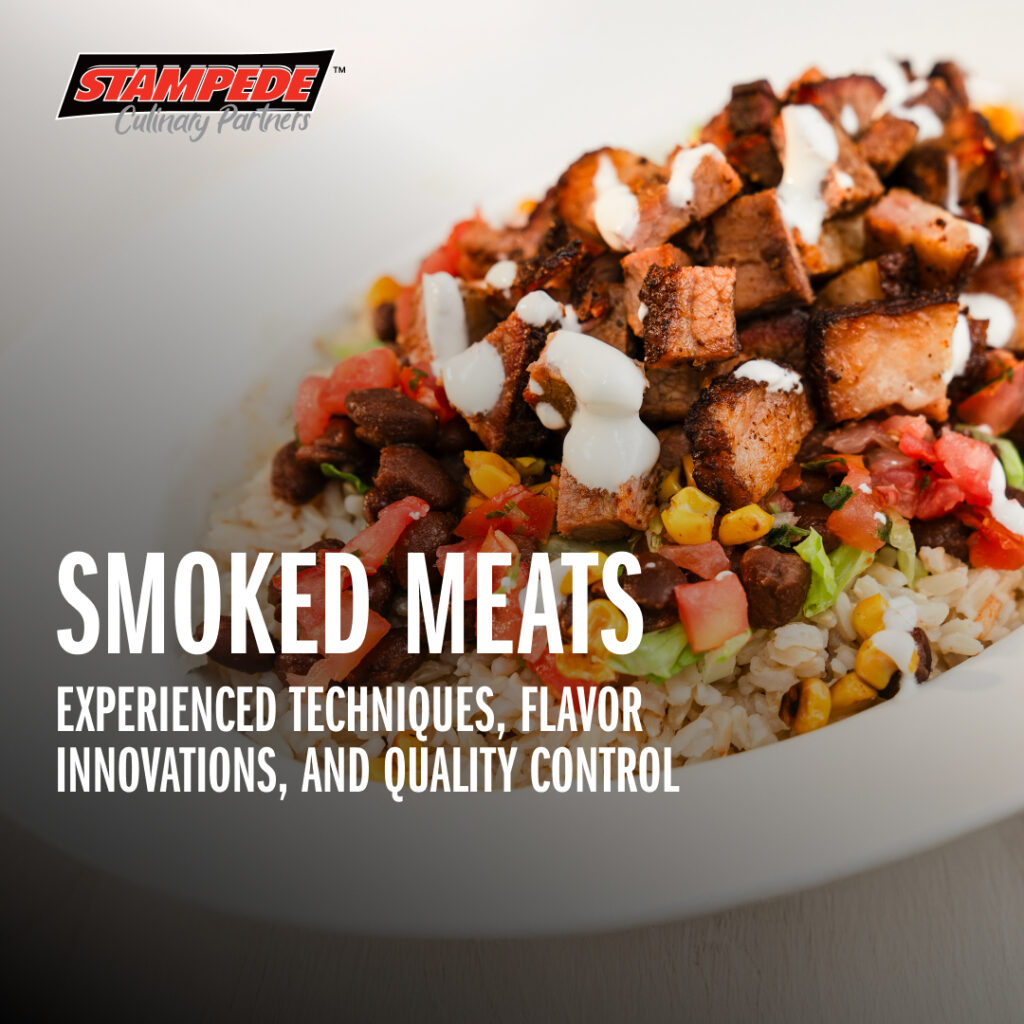
Beef brisket reigns supreme. It’s the go-to choice for many customers, who gravitate towards the familiar comfort, marbling and rich flavors that brisket offers. Versatile in preparation, brisket can be enjoyed whole, sliced, shredded, or as burnt ends. This variety allows for customization across flavor profiles—spicy, sweet, or savory—to meet diverse tastes.
Pulled pork is another favorite, known for its tender texture and savory goodness, often enjoyed in the form of shredded pork carnitas or classic smoked pulled pork. More recently, smoked chicken has gained popularity, requiring a lighter, more delicate smoke. Chicken cuts such as breasts, thighs, and wings, as well as smoked half-chickens, offer a flavorful, leaner alternative to red meat.
Beyond the classic favorites, sausages, pork loins, hams, picnics, and bacon also hold a prominent place in the lineup of popular smoked meats. These products offer rich, smoky flavors that appeal to a wide variety of tastes and dining experiences. Sausages provide versatility, perfect for everything from breakfast to gourmet entrees. Meanwhile, pork loins and hams bring a tender, hearty option to tables, while bacon and picnics deliver signature, smoky indulgence. The mastery of smoking techniques for these meats ensures a consistent and flavorful profile, making them reliable favorites among customers seeking both traditional and innovative menu offerings.
Expanding beyond traditional smoked options, there’s growing interest in alternative beef cuts and larger, presentation-worthy options like pork or beef tomahawk steaks. These cuts showcase the creativity and technical skill of our R&D team, as they require precision in portioning, cook time, and temperature for optimal results.
Exploring Flavor Through Smoking Techniques
Central to the art of smoking is the open-air smoke oven, known for its ability to achieve the prized “bark,” a crispy outer layer that forms under high heat. This bark is an essential component, delivering both texture and a concentrated, smoky flavor. Open-air smoking, while traditional, is more labor-intensive and prone to moisture loss, making it a premium and more costly method.
To balance costs and optimize performance, the team frequently combines traditional smoking with sous vide techniques. By first smoking the meat and then finishing it with sous vide, they achieve both the depth of smoked flavor and an exceptionally tender texture while preserving moisture. For specific cuts, like brisket burnt ends, this process can include a final high-heat sear, adding a crispy, caramelized layer that enhances the flavor complexity. This approach not only creates high-quality, consistent products but also offers flexibility in adjusting flavors to match customer preferences without the added expense of prolonged open-air smoking.
The Role of Slow Cooking and Wood Selection
Slow cooking is essential in smoking, as it tenderizes tougher cuts of meat, breaking down collagen to achieve a soft, melt-in-your-mouth texture. A well-monitored slow cook not only improves texture but also allows for flavor to penetrate deeply into the meat. Our team specializes in sous vide cooking techniques and recipes to achieve the desired texture and flavor balance of each product both in the test kitchen and at scale on the production line.
The choice of wood chips plays a crucial role as well. Hickory is a standard favorite for its bold, earthy flavors, but hardwoods like oak and cherry also add dimension, creating subtle variations to enhance the natural qualities of each meat. While many customers opt for single-wood smokes, custom blends are available for those who want a distinct taste experience.
Post-Cook Processing for Enhanced Quality
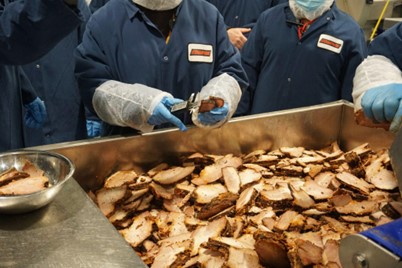
Quality assurance check of a sliced smoked brisket.
After smoking, post-cook processing is vital. Our team emphasizes strict quality control, handling each step—whether slicing, glazing, or packaging—with meticulous food safety protocols. This ensures that moisture levels are preserved, sauces are optimally applied, and every product is consistent in flavor and texture. Our facilities in Sunland Park, NM, and Alma, GA, both offer a specialized post-cook processing room that’s strictly monitored to ensure quality and safety are delivered every time.
Innovations in Efficiency and Tailored Preferences
We push the boundaries of traditional methods to enhance efficiency in small and large-scale production without sacrificing quality. Our team has a rich and extensive history of producing both traditional smoked meats and unique cuts. By adjusting humidity, heat levels, and cook times, our team fine-tunes our methods to ensure that each smoked product can be tailored to the specific needs of each customer for diverse tastes and applications. To achieve the highest quality and best end-user satisfaction, we always ask: Is the price point reasonable? Does it fit into the customer’s kitchen workflow? These questions guide our development process, ensuring the final smoked product is aligned with the customer’s goals and tastes.
At Stampede Culinary Partners, we are committed to delivering the best of smoked meats. Through a combination of experience in both traditional practices and new technical methodologies, we meet the evolving tastes and preferences of our customers, creating flavors and textures that resonate across a range of smoked meat offerings. Whether it’s the depth of a hickory-smoked brisket or the tenderness of sous vide smoked chicken, each product we prepare reflects the skill and dedication that makes smoked meats a special culinary experience.
Gourmet pet food demonstrates a growing demand for high-quality, nutritious pet food options that mimic the quality and freshness of homemade meals. The sous vide cooking method helps retain flavors, juices, and nutrients, creating balanced meals for pets while preserving the ingredients’ natural flavors and nutritional value.
Features & Benefits within this market:
Natural Ingredients: Just like in human gourmet cuisine, there’s an emphasis on using natural, high-quality ingredients in sous vide pet foods. This includes lean meats, fresh vegetables, and whole grains, often sourced from sustainable and organic suppliers.
Customization: Personalized sous vide pet food options allow pet owners to tailor meals to their pet’s specific dietary needs, preferences, and allergies.
Nutritional Balance: Sous vide pet foods are formulated to provide a well balanced and complete diet for pets, meeting their nutritional requirements for optimal health and well-being.
Human-Grade: Many gourmet sous vide pet food brands market their products as human-grade, meaning they’re made with safe and suitable ingredients for human consumption. This reassures pet owners about the quality and safety of the food they feed their pets.
Convenience: While gourmet sous vide pet food is considered premium, brands that offer convenient packaging options, such as pre-portioned pouches or frozen meals, can make it easier for pet owners to serve their pets healthy, gourmet meals without the hassle of preparing them from scratch.
Sous vide pet food.
Using the sous vide method ensures uniform cooking, maximizing tenderness and quality by the implementation of a consistent, low temperature moist heat cooking environment. As more pet owners prioritize their pets’ health and wellness, this niche will likely continue expanding.
Stampede Culinary Partners has produced and distributed gourmet, human-grade pet food since 2021. We are proud of our high-quality offerings in this space and are thrilled to announce that as of October 2023, we have met the requirements for the USDA Process Verified Program for Human Grade Pet Food. This certification means that all ingredients and raw materials in our sous vide pet food are fit for human consumption.
This certification is a huge milestone for our pet food products, and we are thrilled to share this news with all our customers. Our Bridgeview, Oak Lawn, and Sunland Park facilities received this prestigious certification. We train our employees to maintain our rigorous standards in the separation of raw materials and to be prepared for regular daily government agency inspections and BRC audits.
“Our pet food quality and procedures follow the same high standards that our customers come to expect,” said Ann Clarton, Stampede’s Senior Director of Food Safety and Quality Assurance. “We have separate procedures in place for our various product categories, but each is held to the highest standards. We are committed to excellence in all of our Stampede offerings.”
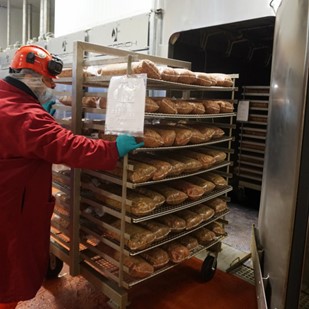
Oven at Sunland Park, NM plant.
In addition to our high-quality raw materials and top-of-the-line procedures, Stampede’s gourmet pet food is cooked sous-vide style. Sous vide cooking leverages steam to create a consistent temperature to cook food to a perfect degree of doneness in sealed pouches. It reduces the food’s exposure to pathogens which increases safety, and it helps retain the food’s great flavor and nutritional content. Sous-vide cooking can also make digestion easier, which can be especially important for pets with sensitive stomachs.
Stampede’s culinary team carefully crafts each recipe to make each meal of the highest quality. Our pet food is generally made with meat, fruit, and vegetables such as cranberries and kale. Specialized options include the surf and turf option. Stampede has even made special holiday blends so that pets can celebrate special occasions with the rest of the household.
In New Mexico, the Doña Ana County Community Network hosted a tour for Federal partners who attended the Voices of the Community New Mexico Partner Forum on March 12, 2024. The focus was on flooding infrastructure and a university-backed certification for meat-processing professionals in Southern New Mexico.
Attendees from USDA Rural Development, the White House, Housing and Urban Development (HUD) and Federal Emergency Management Agency (FEMA) began their tour in La Union, New Mexico a small colonia community who is on the path to recovery after multiple years of monsoon-related flooding. The most recent flooding event occurred in August of 2021 where a dam breach caused severe damage and flooding to a large portion of this underserved, low-income colonia community.
RPN’s Community Network Liaison, Patricia Villalobos, in collaboration with Doña Ana County Flood Commission, and FEMA have worked to assist the community with ponding and storm drain projects. Mr. John Gwynne, Director of Doña Ana County Flood Commission and Mr. Michael Ku, Mitigation Advisor of FEMA were present to provide the group with history, challenges, and current projects that are being designed and developed for flood control.
Watch and read below to learn more about our journey to Stampede Culinary Partners.
At Stampede Culinary Partners, we have a rich history of butchery that goes back decades, generation over generation. Meat continues to be our trade, and butchery is a fundamental part of our core skill set and workmanship.
Our team of certified butchers have a mastery over the disassembly process, creating efficiency in expertly prepared meat products from form to portion size to bulk, and available in a wide variety of pack sizes. Simultaneously, our chefs are an integral part of our strategy to create solutions and custom products for our customers. They are deeply ingrained in our partnerships, so we are ready and able to execute whenever a need arises for a limited-time item, a change in the marination system, or a healthier ingredient statement.
Together, over the years, we have expanded to work on innovative culinary solutions and detailed specifications for projects that focus on more than meat –like braised brussel sprouts with bacon, sous vide soups, vegetable-based proteins, smoked meats, and more.
We have also grown in terms of product types, reach and geography, with our latest oven expansion projects in Georgia, New Mexico and Ontario, Canada leading us to building the largest capacity in commercial sous vide manufacturing in North America. When we discovered a wide gap in the available data and resources in commercial sous vide, our answer was to conduct a thorough research study on the State of Sous Vide. The goal is to ensure the industry effectively serves this rapidly expanding cooking methodology.
While we are actively leveraging new technologies to equip ourselves with culinary techniques to serve consistently prepared, great tasting foods, we remain diligent about standardization so we can offer the same level of robust food safety and high quality at every Stampede Culinary Partners location. Our commitment to food safety is at the forefront of everything we serve, and we have held the BRCGS Global Food Safety Standard certification for over a decade and counting.
Ultimately, we view our role as contributing meaningfully to the meal experience for the end consumer, wherever our products are served. From butchering meats with quality cuts to preparing food solutions with new technologies, we will always be focused on high levels of execution. As our journey continues, we are building on our foundation of butchery with new culinary methods to meet the diverse food needs of tomorrow.